The world we are building for future generations is the responsibility of us all. It is an individual and collective responsibility, a struggle we must face together. That is why we have chosen to share our impact report with as many people as possible. No contact form. No restrictions. Perhaps it will help spark a new idea or inspire action.
Our aim is simple: to share our approach in the most direct, open and transparent way possible.
Understanding the challenges of the energy transition through concrete actions
In the face of the climate emergency, the transition to more sustainable energy has become a collective challenge. But beyond ambitions and announcements, it is essential to be able to rely on concrete data to understand the solutions that truly contribute to reducing CO₂ emissions.
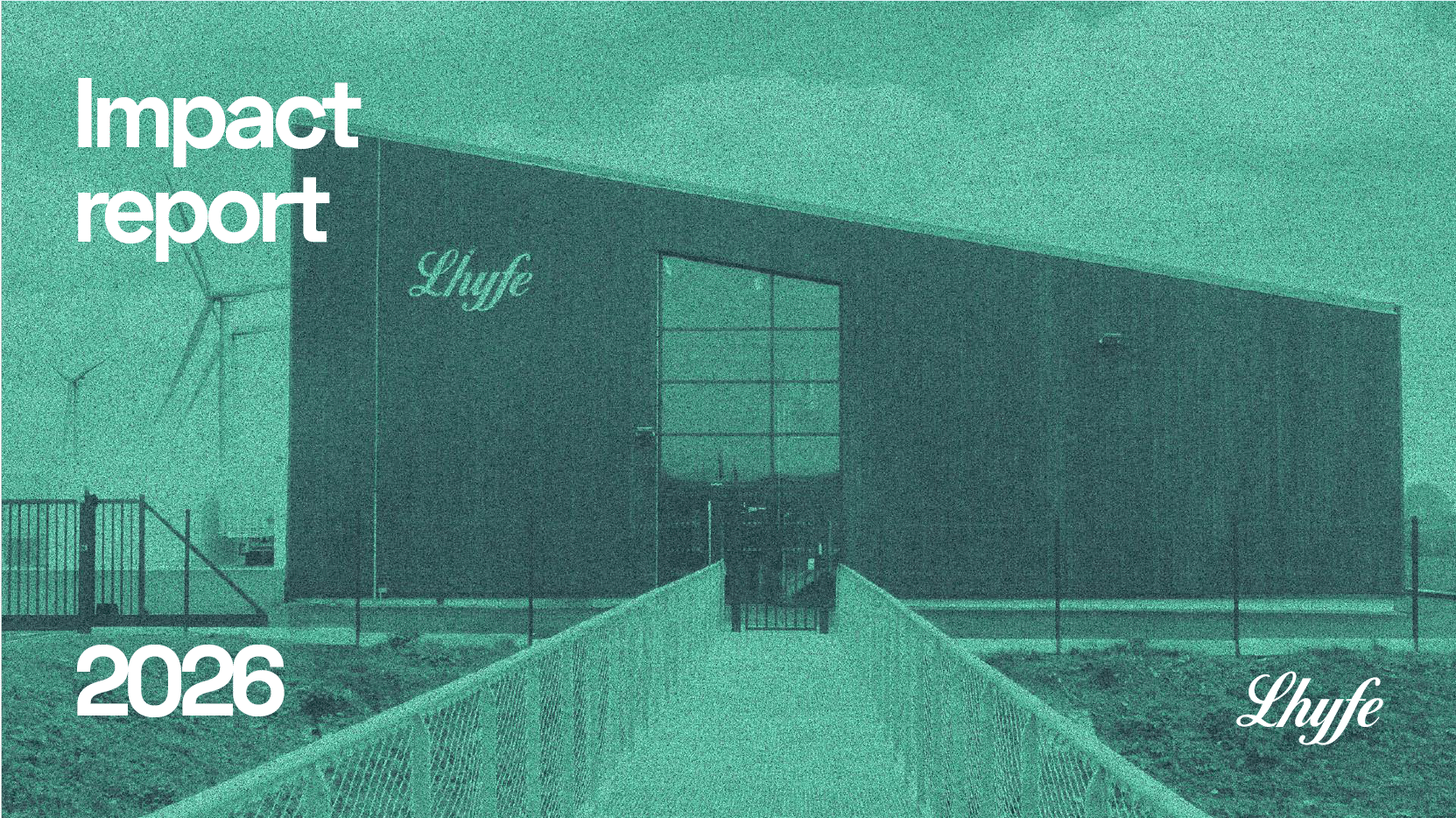
This 2026 Impact Report presents the actions taken by Lhyfe to produce and develop renewable hydrogen, as well as the environmental and social results achieved. It also highlights the challenges we face and the areas in which we continue to make progress.
This document reflects who we are: a committed, ambitious and transparent company. It is not intended to be perfect, but to present honestly the progress made, the lessons learnt from our experience and the efforts that still lie ahead.
At Lhyfe, social and environmental responsibility is not just a PR exercise: it is at the heart of our mission. We firmly believe that renewable hydrogen, produced from renewable energy sources, can play a significant role in reducing CO₂ emissions and building a more sustainable energy future.
Why read the 2026 Impact Report?
This document helps you better understand the challenges associated with renewable hydrogen and how Lhyfe measures its environmental and social impact.
You will find:
- concrete data on our operations;
- environmental performance indicators;
- the results of our CSR initiatives;
- progress made and future objectives;
- a transparent look at the challenges of the energy transition.
Whether you are committed to decarbonisation, a player in the industrial or mobility sectors, a partner in the energy transition, or simply curious to better understand the role of renewable hydrogen, this report aims to inform your thinking and share concrete lessons learned from the field.
Up to 99.5% fewer CO₂ emissions
compared to fossil hydrogen
Over 4 million kg of CO₂ avoided
since 2021
Europe’s leading
producer of renewable hydrogen (RFNBO) via electrolysis