
Published the 18/05/2026
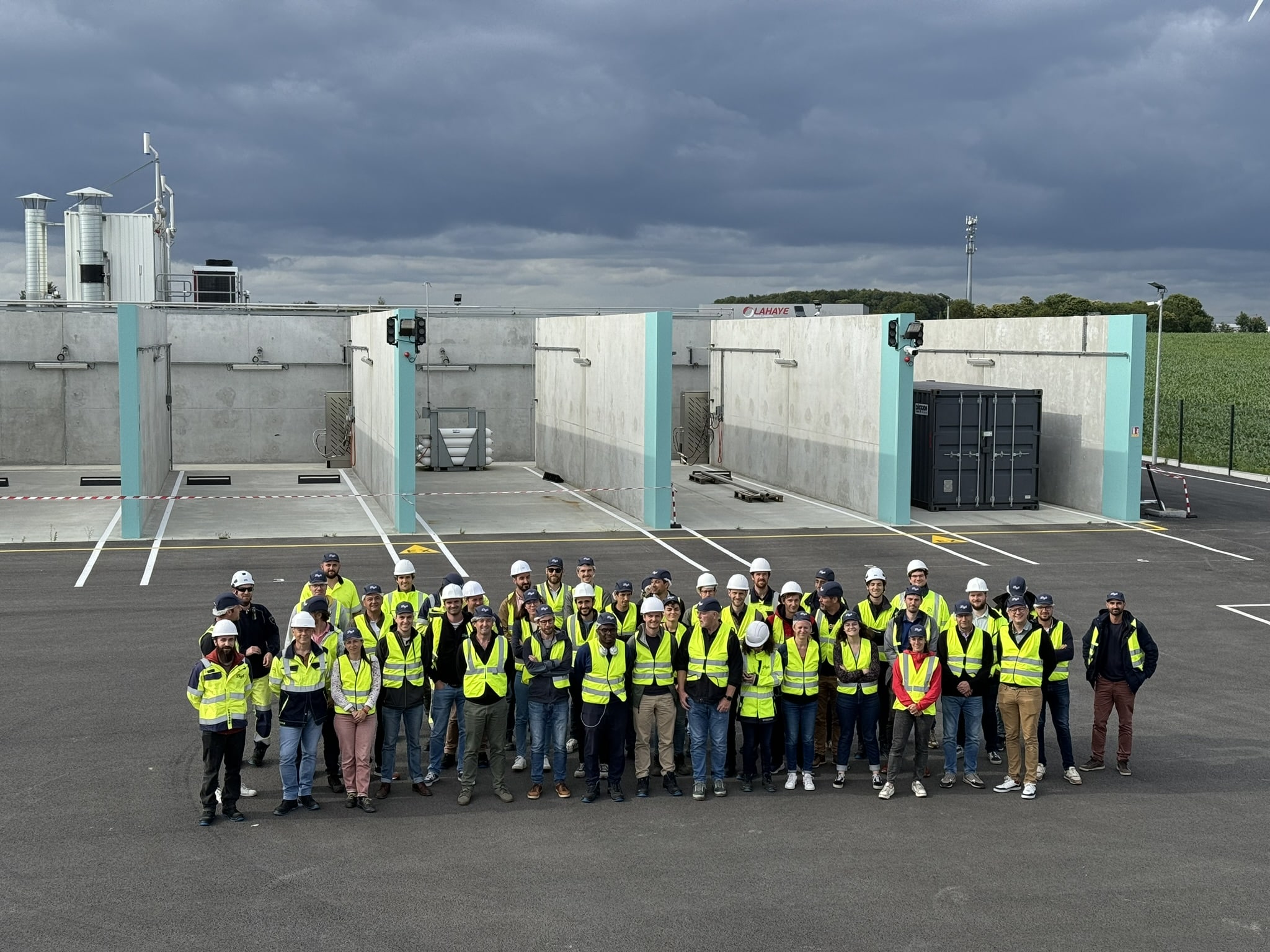
In an industry as demanding as that of renewable hydrogen, safety never relies solely on technology. It relies above all on the men and women who design, operate and maintain the facilities. At Lhyfe, regulatory and technical training is therefore a central pillar of the HSE approach and a key driver of sustainable performance.
An innovative sector requiring constantly evolving skills
The production and distribution of hydrogen involve specific industrial risks that require not only a rigorous grasp of regulatory frameworks but also a constant ability to adapt. In a sector undergoing rapid technological change, skills cannot remain static.
Continuous training therefore becomes a strategic tool to support industrial growth whilst ensuring a high level of safety. It is with this in mind that Lhyfe has structured its training policy around the risks specific to the hydrogen sector, incorporating both regulatory requirements and the operational needs of its sites.
2025 Review: Training as an Operational Necessity
The year 2025 confirms that training is an essential driver for supporting the development of the hydrogen sector. Between January and December, 3,040 hours of training were completed within Lhyfe, across all areas. Of these, 784 hours were specifically dedicated to safety, illustrating a fundamental principle: the protection of people remains an absolute priority.
Furthermore, 541 hours of training were delivered in-house as part of an active knowledge-sharing initiative. This approach promotes the transfer of knowledge and feedback between employees, highlights internal expertise and reinforces the safety culture on a daily basis.
2026: towards a more structured approach to skills
Building on this momentum, from 2026 Lhyfe will embark on a new, transformative phase: the strengthening and harmonisation of training programmes related to the main industrial risks in the hydrogen sector.
HSE teams will therefore undertake targeted training focusing in particular on:
• improving the reliability of safety loops,
• prevention of risks associated with explosive atmospheres (ATEX),
• the transport of hazardous materials,
• lockout/tagout procedures for all fluids,
• the drafting of prevention plans
• working at height.
The aim is to strengthen operational risk management, both in the day-to-day running of existing sites and when opening new production units.
Beyond strict compliance with regulatory requirements, this approach is part of a broader commitment to enhancing industrial safety skills. It aims to foster a consistent HSE culture shared by all teams, by anticipating the challenges associated with the industrialisation and scaling up of the renewable hydrogen sector.
A two-tier skills framework to support growth and safeguard production sites
With a view to structuring and supporting its growth, Lhyfe has, since 2025, been undertaking a major initiative ahead of 2026 to overhaul its skills and training matrices by role. A comprehensive matrix, covering all the company’s functions, has been designed to support the development of teams with clearly defined skill levels, ensuring consistent, measurable and coherent progression across the Group.
In addition, a matrix specific to production sites addresses the unique requirements of industrial environments and roles related to hydrogen production. It incorporates regulatory obligations as well as six key pillars of industrial safety, forming a common foundation for O&M technicians and Plant Managers. In this context, extensive work has been carried out to harmonise ATEX regulations in order to strengthen the management of risks associated with explosive atmospheres, and a dedicated training programme for site managers has been rolled out. This integration of the global framework with operational implementation at the sites enables the company to support its growth whilst ensuring high standards in safety and industrial management.
A sustainable approach to fostering a safety culture
Through this regulatory and technical training strategy, Lhyfe is setting out a clear vision for industrial safety. Training, structuring, knowledge transfer and forward planning are all key drivers for supporting the growth of the renewable hydrogen sector whilst maintaining high HSE standards.
In a sector undergoing rapid industrialisation, safety is built sustainably through an agile organisation that places human reliability at the heart of its priorities!