
Published the 02/02/2026
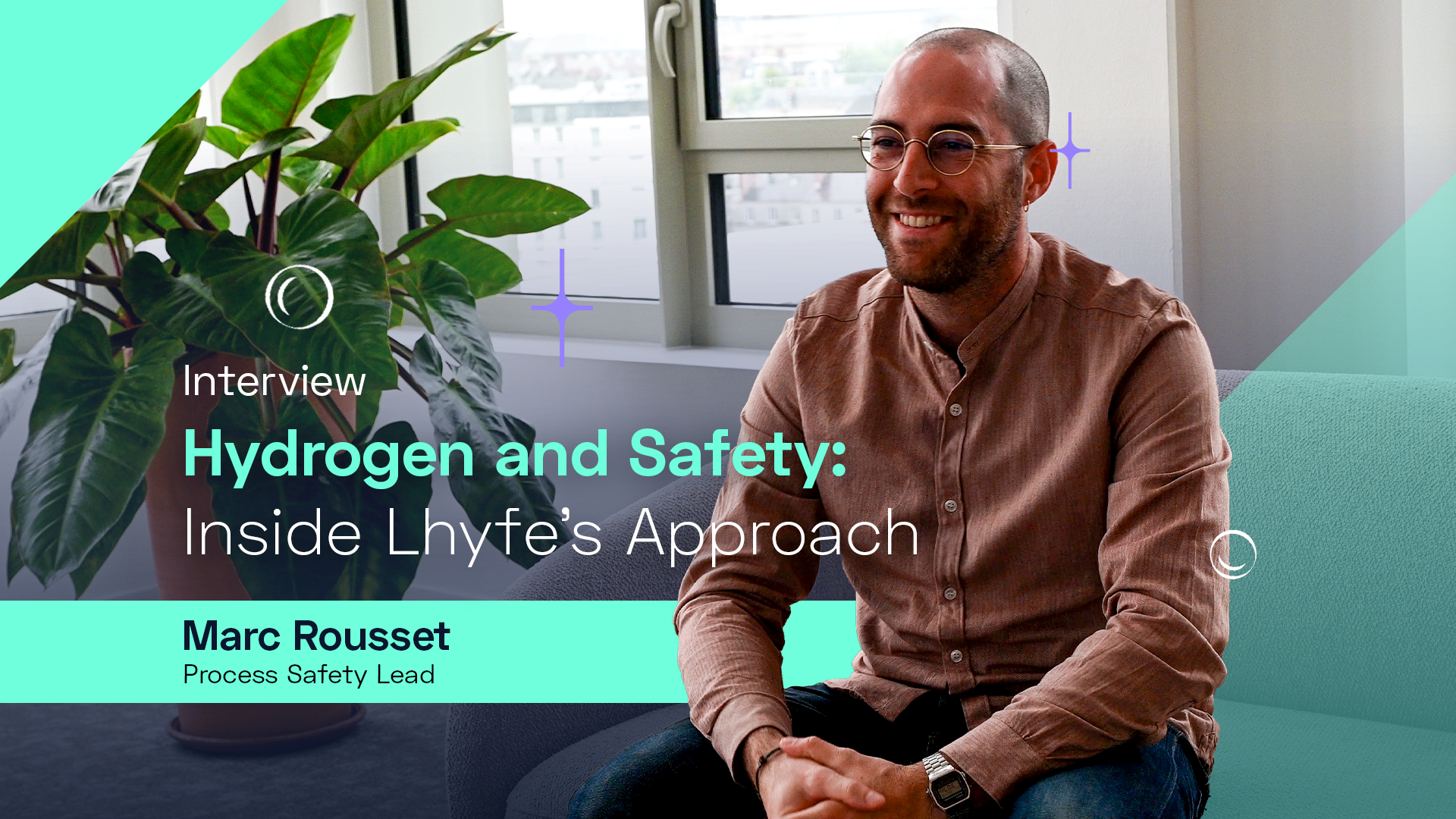
Producing green hydrogen at an industrial scale is an exciting technological challenge — but it also comes with major responsibilities, and it relies on solid, proven expertise to ensure safety at every step. Safety sits at the very heart of Lhyfe’s operations, from the design of our production sites to daily on-the-ground practices. Behind every molecule of hydrogen we produce, there’s a team ensuring that safety is never left to chance. For us, safety is not a checklist. It’s an expertise.
We sat down with Marc Rousset, Process Safety Lead at Lhyfe, to talk about what safety means in the day-to-day life of Lhyfe.
A Role at the Crossroads of Design and Operations
Marc is part of Lhyfe’s Health, Safety, and Environment (HSE) team. His mission? To identify, evaluate, and reduce industrial risks on hydrogen production sites — and to ensure that the safety measures defined during the design phase are effectively implemented and maintained throughout the entire operating life of each site, up to hydrogen delivery.
One of the advantages at Lhyfe is that we are an integrated operator,” Marc explains. “That means I work with both the design teams — process engineers, electricians, project managers — and the operations and maintenance teams who run our plants day to day. My role is to bridge the two worlds and ensure that what is planned on paper is effectively put into practice.
Beyond Lhyfe’s walls, Marc also collaborates with suppliers and participates in hydrogen working groups, ensuring that practices evolve with international standards and lessons from the wider sector.
From Risk Analysis to Real-World Hydrogen Safety
Safety at Lhyfe begins long before a site is built. During the design phase, the team conducts in-depth risk analyses — such as HAZOP (Hazard and Operability), LOPA (Layer of Protection Analysis), and hazard studies required for environmental permits.
These studies anticipate critical scenarios and define layers of protection: sensors, automatic shutdowns, protective equipment, or process adaptations.
But the job doesn’t end with paperwork. Once a plant is operational, Marc and his colleagues verify that safety barriers exist, are functional, and remain reliable over time. This requires regular inspections, audits, and tests to ensure equipment and procedures continue to perform as expected.
The Key Safety Risks of Hydrogen – and How We Manage Them
Hydrogen is a clean energy carrier — but it must be handled with care. Marc outlines the main risks of Lhyfe’s green hydrogen sites:
- Fire and explosion risks: Hydrogen is highly flammable, with a wide explosive range. Careful ATEX zoning, adapted equipment, and strict preventive measures are critical.
- Pressure risks: Hydrogen must be compressed up to 400 bar for transport. High-pressure equipment and connection phases are particularly sensitive.
- Electrical risks: Electrolysers, powered by high-voltage direct current, pose specific electrical hazards.
- Anoxia risks: Nitrogen is used on sites, and leaks can displace oxygen in confined spaces.
- Logistics risks: Hydrogen is transported by truck. Large manoeuvring areas mean operators and drivers face circulation-related hazards.
For each of these risks, Lhyfe has prevention and mitigation systems in place: from monitoring and adapted infrastructure to training operators and standardising site procedures.
Safety Isn’t a Checklist, It’s a Culture at Lhyfe
At Lhyfe, safety isn’t just managed in reports — it’s lived every day.
- HSE supervisors visit sites weekly to ensure compliance and gather feedback.
- Regular audits identify areas for improvement, leading to concrete action plans.
- Open communication is encouraged, so every operator feels confident raising safety concerns or suggestions.
Safety is everyone’s business,” Marc says. “The key is trust and dialogue. That’s how we improve together.”
This collaborative approach creates a genuine safety culture, where each person plays an active role in risk prevention.
Learning Together, Beyond Lhyfe – Contributing to the Hydrogen Sector as a Whole
Hydrogen safety is not a challenge we face alone. At Lhyfe, we also share our expertise beyond our own sites. We participate in hydrogen working groups at national and international levels — for example, through France Hydrogène.
These collaborations allow us to:
- Track evolving regulations and standards.
- Exchange best practices with peers across the sector.
- Learn from incidents and near-misses reported elsewhere, through industry-wide “safety flashes”
Every accident is a lesson,” says Marc. “The question we always ask ourselves is: could this happen here? And if yes, what do we need to put in place to prevent it?”
Motivation and Pride: Safety for a Decarbonised Future
For Marc, the motivation is clear:
It’s a great role — reducing technological risks while supporting a company that is driving industrial decarbonisation. That’s what keeps me going every day.”
One recent achievement he is particularly proud of is the successful rollout of a standardised approach to managing the lifecycle of safety functions. This methodology, now adopted across Lhyfe, strengthens the robustness of sites and unites design and operations teams around shared safety practices.
Safety at the Core of Our Mission
At Lhyfe, safety is not an afterthought – it’s the foundation of everything we do in green hydrogen production. From design to deployment, and across borders, our HSE team is dedicated to anticipating, controlling, and reducing risks every day.