
Published the 21/01/2026
Hydrogen is already essential for industry, yet over 95% of the hydrogen used today is fossil-based, responsible for nearly 900 million tonnes of CO₂ emissions every year. With renewable hydrogen, companies can keep using the same molecule, with the same performance and purity, but with up to 10 times fewer emissions.
The advantage of moving now is clear. Renewable hydrogen not only helps cut CO₂ immediately; it also strengthens competitiveness, secures supply chains, and reduces exposure to fossil price volatility, a market that has seen up to 400% price swings in the past two years.
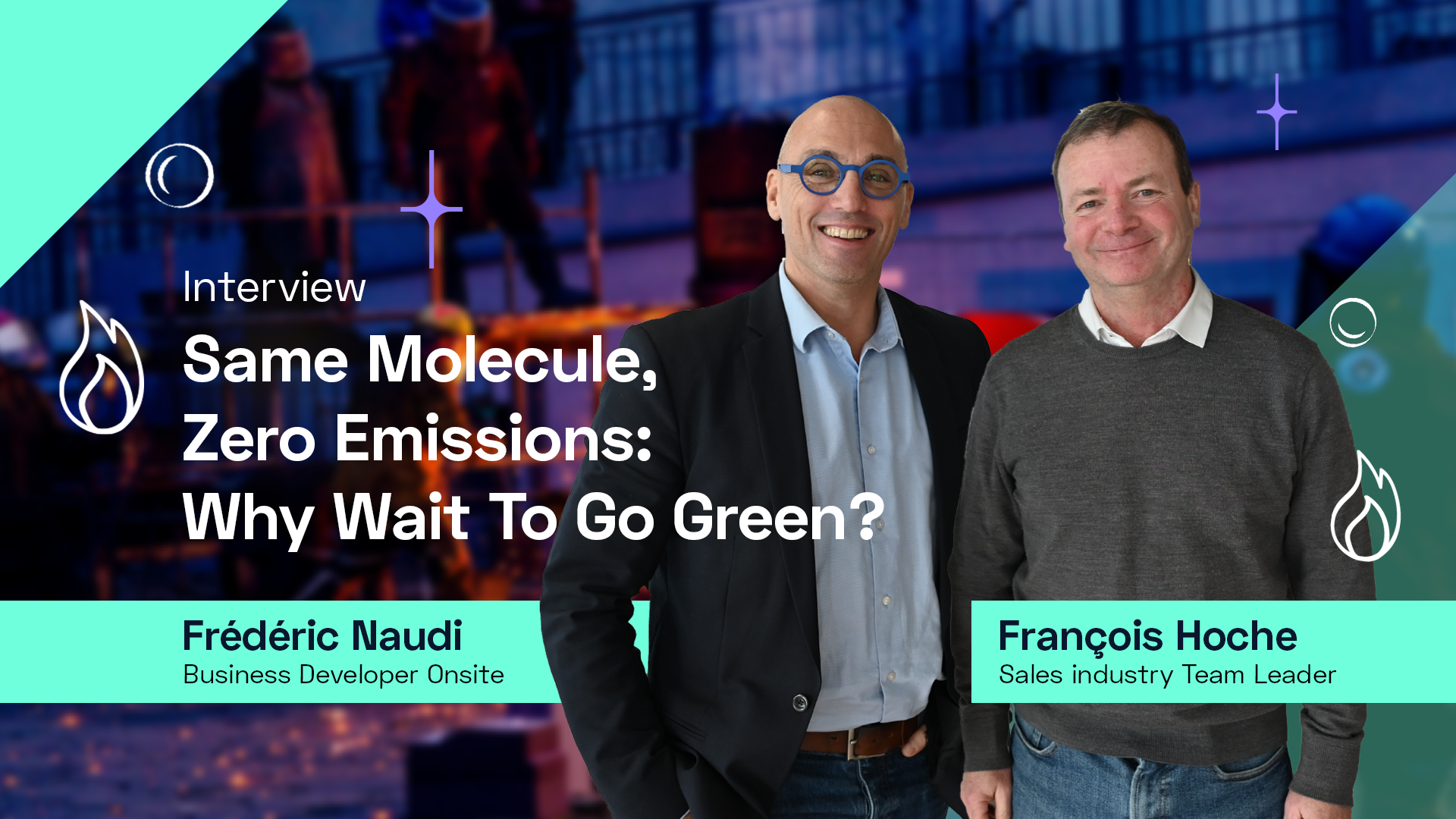
To understand why early movers stand to benefit the most, we spoke with François Hoche, Industry Expert, and Frédéric Naudi, Business Developer for the industrial market at Lhyfe, who support industrial players in accelerating their transition to renewable hydrogen.
Can you introduce yourself and explain your role at Lhyfe?
François Hoche:
“I’m in charge of coordinating our business development activities for the industrial sector across all the regions where Lhyfe operates. In short, my role is to ensure alignment and momentum so we can effectively support industries in their transition to renewable hydrogen.
Frédéric Naudi:
“I’m a business developer for the industrial market at Lhyfe. My job is to work with industrial clients to understand their needs and help them find the right renewable hydrogen solution so they can move from fossil-based to renewable hydrogen smoothly.”
From an industrial perspective, what truly differentiates fossil-based hydrogen from renewable hydrogen in practice?
From a physical and chemical standpoint, nothing changes. Hydrogen is always H₂. Renewable hydrogen (often called “green hydrogen”) and fossil-based hydrogen (often referred to as “grey hydrogen”) are chemically identical and reach the same industrial purity standards, meaning existing industrial processes can continue unchanged.
The difference lies entirely in how the hydrogen is produced.
Fossil-based hydrogen is mainly produced from natural gas through Steam Methane Reforming (SMR) or Autothermal Reforming (ATR). This process emits more than 10 kg of CO₂ per kilogram of hydrogen, and its supply chain generates methane leaks — a greenhouse gas with a global warming potential around 28 times higher than CO₂.
Renewable hydrogen, by contrast, is produced through electrolysis using renewable electricity. This reduces lifecycle emissions by more than a factor of ten, while delivering hydrogen with only benign impurities such as water, nitrogen, or oxygen.
As a result, the moment an industrial player switches from fossil-based to renewable hydrogen, the climate benefit is immediate and substantial — with no need to redesign processes or wait for new technologies.
Switching is not just an environmental upgrade. It also reduces exposure to fossil fuel volatility, strengthens energy independence, and prepares companies for tightening carbon regulations. In a context where emitting CO2 will only get more expensive, moving early places companies on a stronger, future-proof trajectory.
In short: changing the colour of your hydrogen is one of the most impactful decarbonisation decisions an industrial player can make today.
Decarbonisation is often perceived as complex. How simple is it really to switch hydrogen sources?
When an industrial process already uses hydrogen, switching from fossil-based hydrogen to renewable hydrogen is very straightforward.
Because the molecule is identical, renewable hydrogen behaves the same in all applications — whether in metallurgy, chemical hydrogenation, or controlled atmospheres. In most cases, no technical modifications are required.
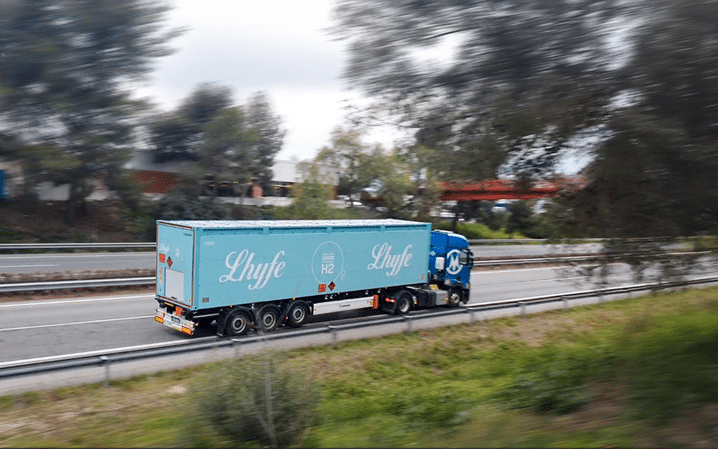
On the supply side, the transition is just as simple. Many industrial users rely on trailer deliveries of compressed hydrogen. Lhyfe already has 4 years of operational experience and has completed more than 1,000 deliveries, supported by a fleet of over 70 high-capacity trailers and four production plants, soon expanding to six. This proven track record ensures secure, reliable, and efficient logistics for industrial clients.
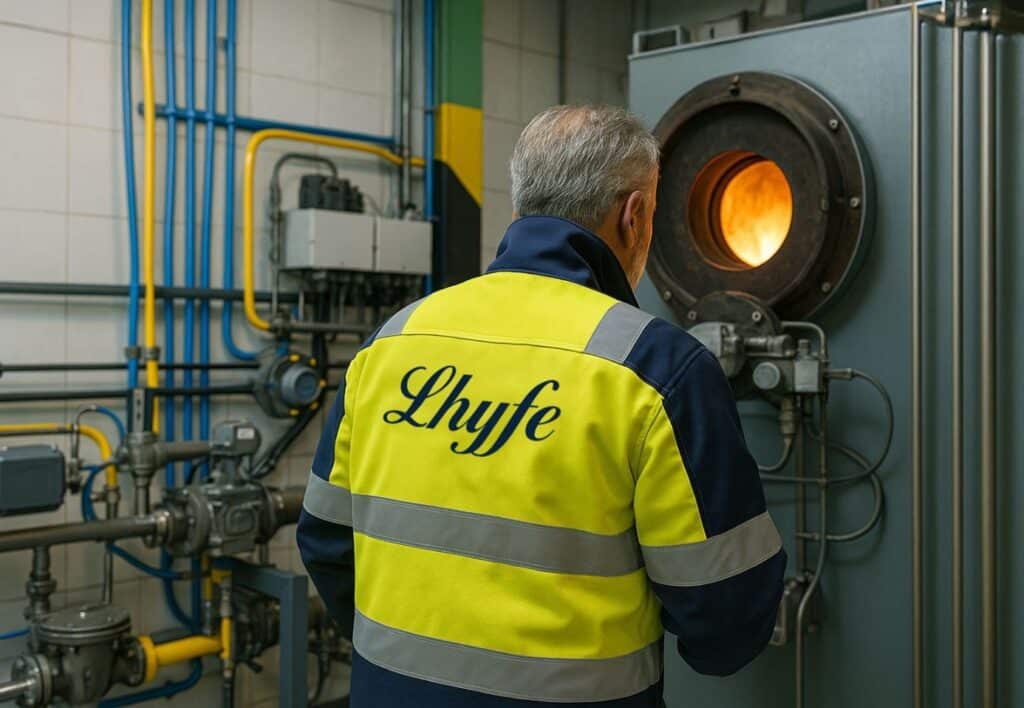
For larger or continuous consumption, hydrogen can also be produced directly on-site. Lhyfe offers a full range of standardised plant concepts that are adapted to each customer’s consumption profile and operational needs, making integration smooth and predictable.
So, while decarbonisation can sometimes seem complex, the switch from fossil-based to renewable hydrogen is one of the most impactful steps an industrial player can take, with minimal disruption and maximum impact.
Beyond emissions, what are the hidden costs or vulnerabilities of relying on fossil-based hydrogen in terms of energy dependence on fossil fuels?
Producing renewable hydrogen means producing energy locally, directly from local renewable resources. For countries that rely heavily on imported fossil fuels, this shift has become a powerful lever for reindustrialisation and energy sovereignty. By replacing fossil-based hydrogen and its underlying fossil feedstocks, industries become far less exposed to geopolitical tensions, price volatility, and supply disruptions in such a strategic sector.
What are the main barriers still slowing adoption today?
A clear and stable regulatory framework is essential for launching the energy transition in industry. Across Europe, the implementation of the RED III directive is progressing at different speeds. While the overall direction is clear — increasing the share of renewable hydrogen and progressively removing fossil advantages — national transpositions are still evolving. Some countries are moving ahead, but many remain behind schedule. This transitional phase can temporarily slow investment decisions, as companies wait for final regulatory clarifications that are expected to be in place soon.
At the same time, fossil fuels are still not priced in a way that reflects their true cost, particularly when environmental impacts are taken into account. The current carbon pricing and CO2 taxonomy do not yet provide a strong enough signal to accelerate the shift to renewable hydrogen. In the chemical sector, for example, large emitters are subject to ETS quotas, but paying for CO₂ allowances can still be cheaper than switching to renewable hydrogen.
Free CO2 allowances will continue to decline each year until 2030 (or 2032 for certain sectors), eventually reaching zero. But the ETS price has not risen enough to drive a significant transformation.
European industries are also concerned that strict RED III implementation could undermine their competitiveness if foreign producers continue to supply lower-cost, carbon-intensive products. CBAM is designed to mitigate this risk, but its application to chemicals and hydrogen-derived products remains complex. For the transition to work, RED III and CBAM must be implemented in a coordinated way.
The goal should not be to penalise EU industry but to ensure that global competitors move toward the same standards, enabling a fair and effective energy transition.
From an operational point of view, what changes are required for switching from fossil-based to renewable hydrogen?
No change is required in principle, as the molecule is identical. Delivery and bulk logistics can often be more efficient with renewable hydrogen, as new tube trailers and containers operate at significantly higher pressures, thus enabling considerably more hydrogen product to be transported and stored at the site (up to 1 ton).
Furthermore, for the large hydrogen requirements of heavy industry where hydrogen is produced on site, industries such as ammonia producers can very quickly reduce part of their steam reformer production to consume renewable hydrogen, actually enabling a reduction in CO2 emissions proportional to the percentage of renewable hydrogen injected, without any negative impact on operations.
How does renewable hydrogen enhance competitiveness, innovation, and brand value?
Let’s take the example of green steel: some bold investors and industrial companies have realized that cleaning up heavy industry, which is responsible for 40% of all global CO2 emissions, is key to tackling the climate crisis. The steel industry alone accounts for more than 7% of the world’s CO2 emissions.
By daring to build greenfield fully integrated and circular plants that rely on giga-scale electrolyzers, powered by renewable electricity, they swap coal (a traditional key raw material for primary steel) for renewable hydrogen, and refine iron ore into green iron, emitting steam, just plain water. This is a game-changing innovation making it possible for them to produce near-zero emission steel, setting up a new industry standard.
Their customers know that going green is key to becoming futureproof. Therefore, these innovative players rely on demand for greener value chains, which has never been higher.
Realizing that green steel can reduce the climate impact of the car industry for just €57 per car, several car manufacturers have already set targets to incorporate more green steel into the manufacture of their vehicles. For example, Volvo has committed to using 25% recycled steel by 2025, while BMW plans to use 50% by 2030. For their part, Mercedes-Benz and BMW have signed agreements with Swedish company Stegra to source low-carbon steel produced from renewable hydrogen and electricity from 100% renewable energy sources. In China, carmaker Chery has signed agreements with Baosteel to source green steel.
In another sector, oil refining, one can say that where the legislative and regulatory framework is there to support (like for refineries in Germany, France, the Netherlands and hopefully soon for many other EU countries), going to renewable hydrogen impacts positively in terms of innovation and brand value.
Through incentive tax schemes like IRICC in France, THG-Quote in Germany, oil refineries are incentivized to convert part of their hydrogen consumption to renewable hydrogen.
Additionally, many of these refineries are on a transformation journey from pure oil and gas players to broader energy companies, including a constantly growing part of their investments, revenues and profits on renewable energy, biofuels, e-fuels and low-carbon hydrogen related products.
Therefore, renewable hydrogen is gradually becoming one of the main pillars of the refiners’ strategy to support and to communicate about their decarbonisation journey. Going for it and communicating about related facts and projects is key for investors and analysts, especially when ambitious scope 1 and 2 targets have been set by the top management.
Some of them have initiated production investments or sourcing projects for very large volumes of renewable hydrogen and advertise for it: at Q3 2025, 45% of electrolytic hydrogen production projects under construction were aimed at refineries, totalling 1,370 MW of installed capacity (the equivalent of around 190k T/y hydrogen).
If the transition is so straightforward, why do you think some industries are still waiting?
The main hesitation today comes from cost. Renewable hydrogen is not yet fully cost-competitive with fossil alternatives at scale. To make large-scale adoption easier, industries need clear and stable long-term policies on taxation, carbon pricing, and support schemes, so they can invest with confidence.
But waiting is not the best option. These first projects are exactly what will unlock a self-sustaining renewable hydrogen economy, driving costs down and strengthening Europe’s energy independence. Companies that move now play a decisive role in shaping this future and will be the first to benefit from its advantages: better access to support mechanisms, stronger market positioning, and a clear demonstration of genuine decarbonisation leadership.
So, while the transition may seem costly today, early movers are the ones who will define the market, capture the opportunities, and be best prepared for the regulatory landscape that is rapidly taking shape.
What would you say to industry pioneers who want to lead the change, and where should they start?
Naturally, as the market grows, costs will continue to fall, which may tempt some industrial players to wait. But being a first mover offers clear advantages. Early adopters benefit from a more supportive ecosystem, priority access to subsidies, and greater public visibility. Governments tend to reward companies that take the initiative and are willing to pioneer new green solutions.
There is also a strong reputational upside. Companies that move early signal true decarbonisation ambition, strengthen their image among stakeholders, and position themselves as leaders in the energy transition. For industries already using fossil-based hydrogen, or for which hydrogen is the right decarbonisation pathway, switching to renewable hydrogen today sends a powerful and credible message.
Regulatory pressure will continue to rise, and support schemes will become more selective over time. Emitting CO2 or other greenhouse gases will only get more expensive, and companies that wait too long may face tight deadlines, fewer support mechanisms, and higher compliance costs.
There is also a practical constraint: once regulation forces mass adoption, the market could become saturated. Equipment suppliers, project developers, and contractors may not have the capacity to deliver the large number of projects required simultaneously, potentially delaying implementation.
The reality is that renewable hydrogen is already available on an industrial scale, supported by a proven and efficient supply chain. For companies considering the switch, now is the moment. Moving early isn’t just a compliance strategy; it’s a long-term competitive advantage.
About Lhyfe
Lhyfe is the pure player of renewable hydrogen: no fossil legacy, no compromise. We deliver 100% renewable, RFNBO-certified hydrogen that cuts CO₂ emissions from day one.
We are not experimenting. We are operating.
With 4 years of field experience +1000 deliveries, immediate volumes 8.3 t/day, and industrial logistics capacity having one of the largest and most modern fleets in Europe for renewable hydrogen +70 ISO containers, with pressures that go from 300 to 380 bar and capacity of 380 to 1000 kg, following high European safety standards all through the process. We already supply +50 customers across Europe with the efficiency to launch new supply points and begin deliveries in only 6 weeks, a timeline unmatched by the sector.
Where others are still planning, we are delivering.
Local production, flexible contracts, agile operations, everything is built so you can deploy hydrogen now, not someday.
Lhyfe builds innovative, local partnerships that reduce transport emissions, unlock flexibility, and secure your supply.
Efficient. Clean. Proven. Scalable.
This is renewable hydrogen ready for impact today, and ready to grow with you tomorrow.
If you are looking to position your company as a market leader, contact our experts to get advice on the readiness of your company to change into hydrogen: Contact us – Lhyfe