
Published the 20/03/2026
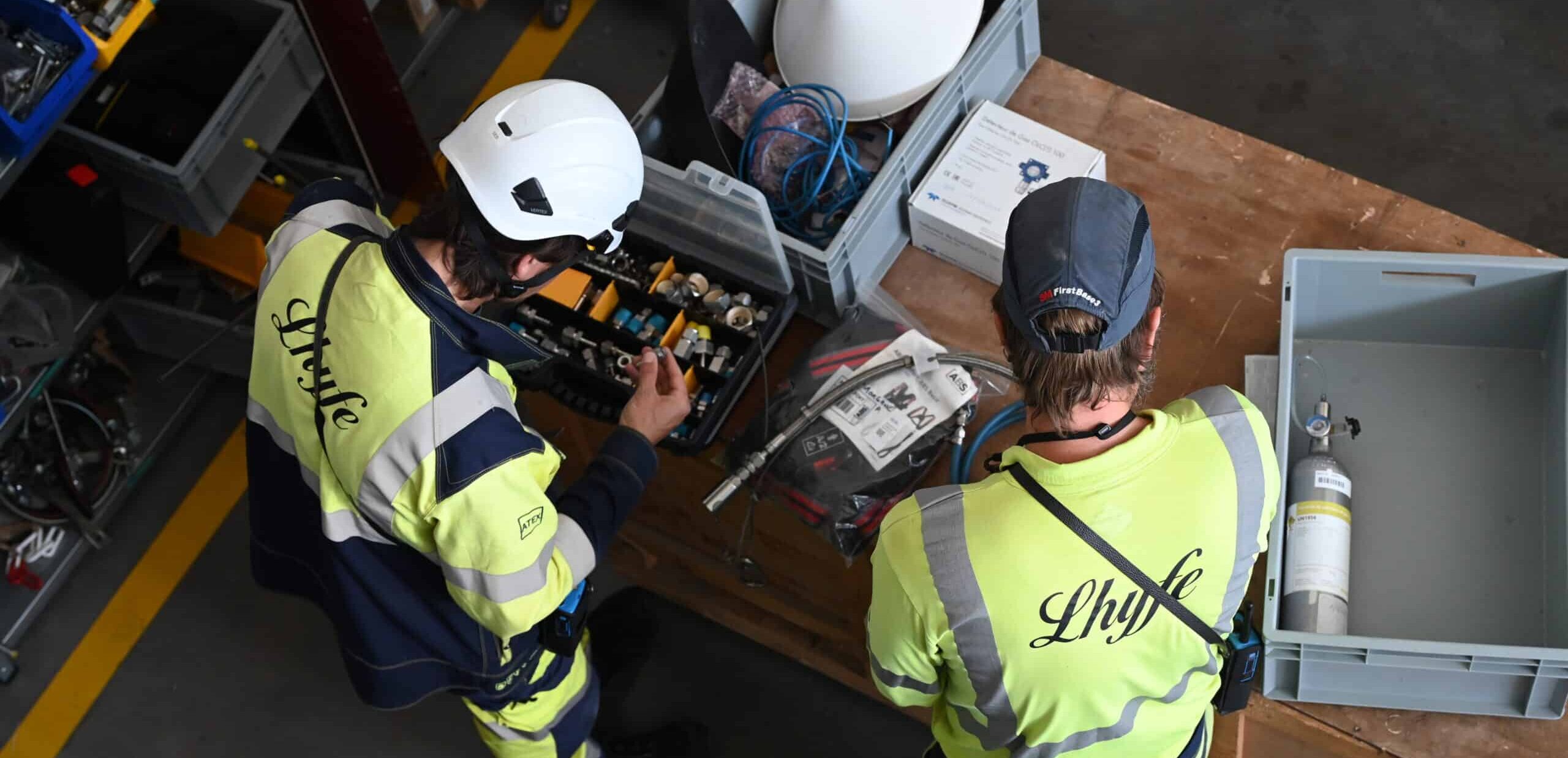
At a renewable hydrogen production facility, safety is never optional — it underpins every stage of operations. Planned shutdowns are fully aligned with this requirement: they are essential to ensuring the long-term performance, reliability and durability of installations.
These periods of preventive maintenance and optimisation enable teams to inspect equipment, anticipate wear and tear, improve performance, and secure the continuous operation of production units. They are not disruptions, but carefully planned industrial operations embedded within an operational excellence strategy.
At Lhyfe, these shutdowns are designed as fully structured industrial sequences, where control of HSE (Health, Safety and Environment) risks is an absolute priority.
Shutdowns: Critical Phases for Installation Safety
Shutdowns at Lhyfe facilities — whether for preventive or corrective maintenance — involve the complete securing of installations. This includes electrical isolation, production stoppage, and the safeguarding of equipment.
These phases concentrate a high volume of interventions within a limited timeframe, often carried out simultaneously by multiple external contractors. As such, they represent high-stakes moments in terms of industrial safety, risk management and regulatory compliance.
Enhanced Coordination to Control HSE Risks
During planned shutdowns organised for maintenance and optimisation purposes, every intervention is subject to rigorous preparation. Lhyfe implements enhanced coordination between internal teams and external contractors to anticipate risks and ensure safe execution.
This includes:
- Systematic communication to all trades regarding hydrogen-specific risks
- Implementation of prevention plans, mandatorily signed by external contractors
- Issuance of work permits for each intervention, tailored to the nature of the tasks performed
This structured approach ensures that activities are properly managed and significantly reduces risks related to simultaneous operations, while maintaining full control over industrial processes.
Work Permits: A Pillar of Maintenance Safety
In the hydrogen industry, work permits are a key tool for risk prevention and industrial safety. At Lhyfe, every maintenance operation is prepared in advance, logged in the CMMS (Computerised Maintenance Management System), and governed by the necessary authorisations: work permits, prevention plans, ATEX permits, working at height permits, confined space permits, and lockout/tagout procedures.
All documentation is validated by the relevant responsible parties, with a high level of training requirements.
This framework ensures the safety of each intervention and provides long-term protection for people, equipment and the environment.
IBM® Maximo®: A Key Tool for HSE and Multi-Contractor Management
To efficiently manage shutdowns, Lhyfe relies on Maximo, a widely recognised maintenance management software in the industry. Maximo plays a central role in controlling HSE risks during shutdown phases.
It enables teams to:
- Issue and track work permits
- Plan and phase maintenance operations
- Manage simultaneous activities by coordinating multiple contractors on the same site
Thanks to this tool, teams benefit from a clear, shared view of ongoing operations, strengthening safety, regulatory compliance and operational efficiency.
Renewable Hydrogen and Safety: A Constant Requirement
Producing renewable hydrogen requires high safety standards at every stage of an installation’s lifecycle. Shutdowns are not merely maintenance periods — they are a true indicator of the HSE maturity of an industrial site.
By structuring these phases around strict processes, appropriate tools, and a shared safety culture, Lhyfe demonstrates that industrial performance and HSE excellence go hand in hand — an essential approach to supporting the safe development of the hydrogen sector.