
Published the 06/03/2026
Hydrogen mobility is now an operational solution for decarbonising the most intensive transport uses. Where direct electrification reaches its limits, renewable hydrogen is emerging as a key lever for the energy transition.
Heavy industry, long-distance transport and logistics with demanding operational constraints account for a significant share of CO₂ emissions and require solutions that combine performance, availability and carbon efficiency. It is precisely in these areas that hydrogen is now proving its value.
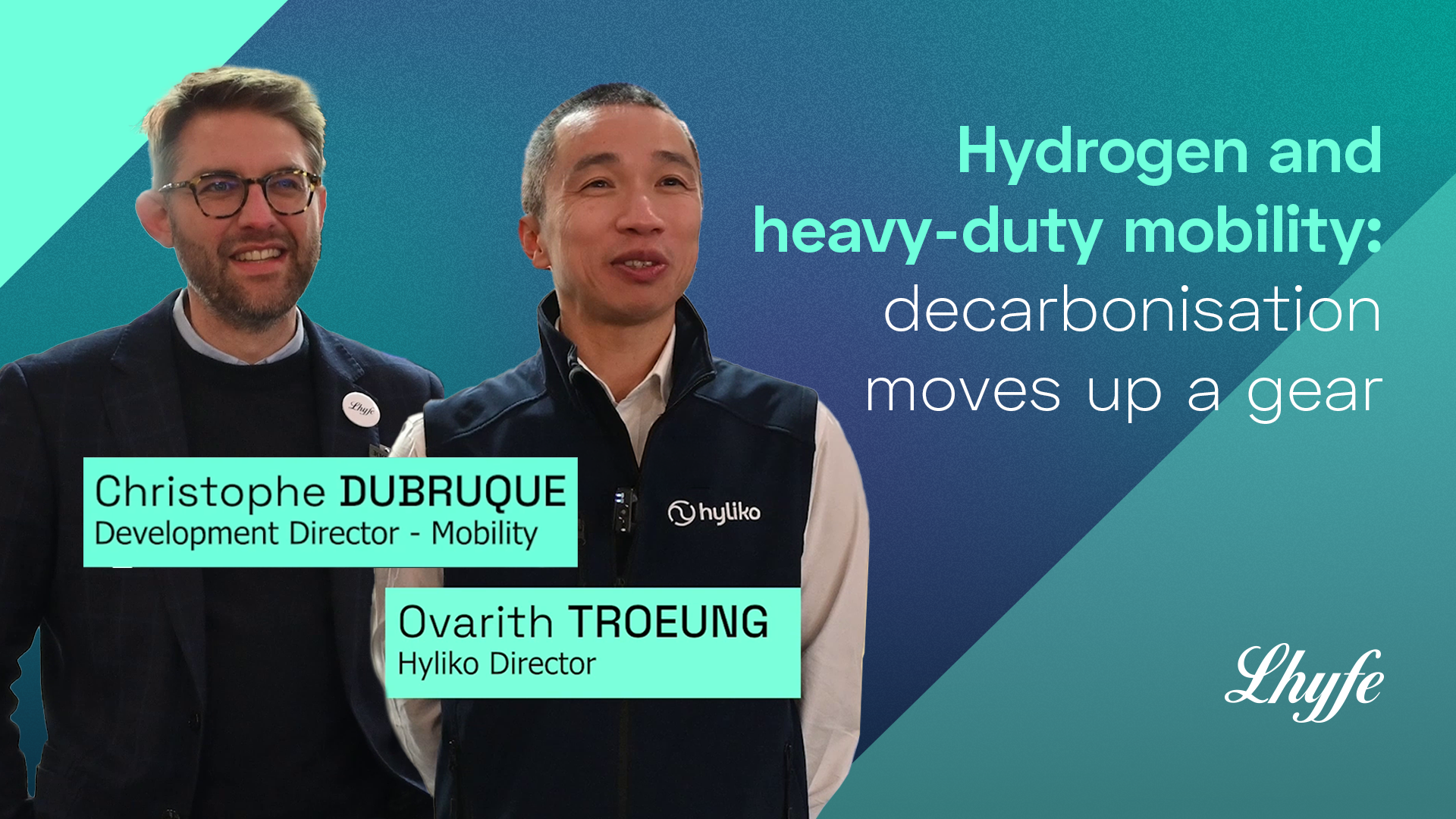
Through the combined perspectives of Lhyfe, a producer of renewable hydrogen, and Hyliko, a pioneer in hydrogen-powered heavy goods vehicles in France, this article explores the maturity of the market, the most relevant use cases and the conditions required to accelerate the sector’s deployment.
Two complementary players at the heart of the hydrogen value chain
At Lhyfe, a producer and supplier of renewable hydrogen, the mission is clear: to produce low-carbon energy locally and make it accessible to mobility and industrial players. Christophe Dubruque, Director of Mobility Development, oversees these strategic applications and supports the development of hydrogen ecosystems across different regions.
For its part, Hyliko is a pioneer in hydrogen-powered heavy goods vehicles in France. Under the leadership of Ovarith Troeung, the company deploys comprehensive, turnkey hydrogen mobility solutions for heavy road transport, integrating vehicles, energy supply and services, including fleet operation and maintenance.
Hydrogen mobility is no longer a promise – it is an industrial reality
Hydrogen is often presented as a solution for the future. However, this perception no longer reflects what is happening on the ground. Hydrogen vehicles are already in commercial operation, including cars, light commercial vehicles and, above all, heavy goods vehicles.
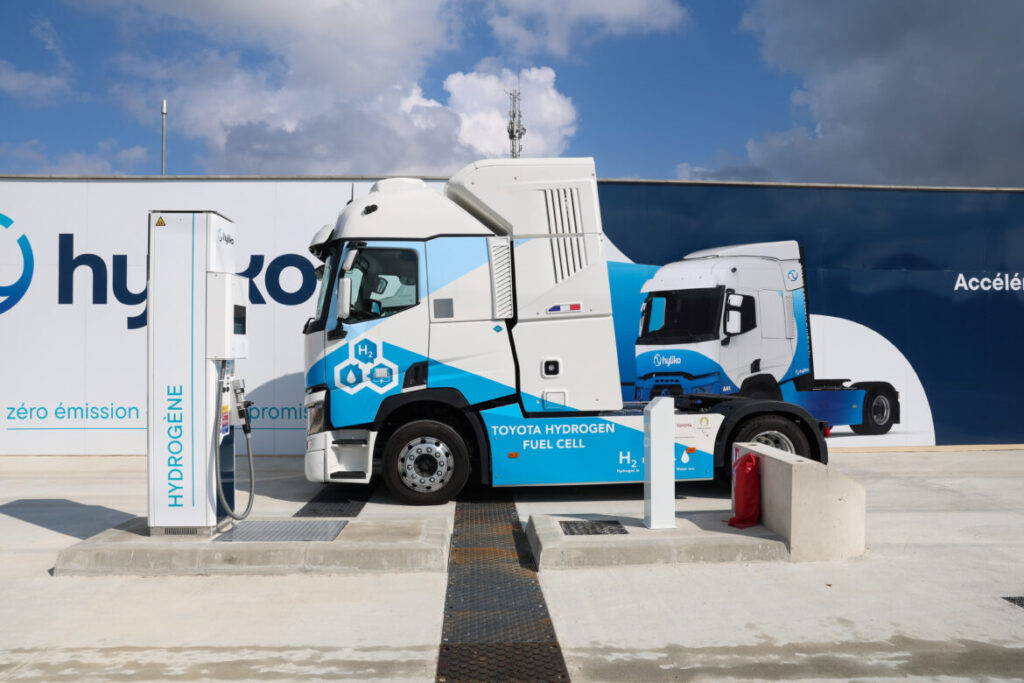
Since 2021, Lhyfe has been producing and supplying renewable hydrogen on an industrial scale, making a tangible contribution to the decarbonisation of energy use. At the same time, players such as Hyliko have opened their first stations dedicated to heavy goods vehicles and are progressively deploying fleets of hydrogen-powered lorries operating in real-world conditions.
For more than a year, these trucks have been operating with levels of reliability that meet the requirements of professional transport. This technological and operational maturity sends a clear signal to decision-makers: hydrogen is now a credible solution capable of meeting everyday operational constraints.
Hydrogen and batteries: choosing the right energy for the right use
The energy transition in transport is not a matter of one technology replacing another. Battery electrification is perfectly suited to short journeys, local routes and predictable uses, offering high energy efficiency and infrastructure that is already widely available.
However, as soon as missions become more intensive or complex, hydrogen becomes a strategic ally. Greater range, rapid refuelling and high energy density are key advantages for long-distance heavy transport or for vehicles carrying energy-intensive equipment.
In reality, every truck is different. Some must power refrigeration systems, tippers, cranes or other specialised equipment with significant energy needs. In such cases, hydrogen ensures vehicle performance without compromising operational availability.
Batteries and hydrogen are therefore complementary technologies, both essential for achieving decarbonisation targets.
Renewable hydrogen and RFNBO: the key to climate credibility
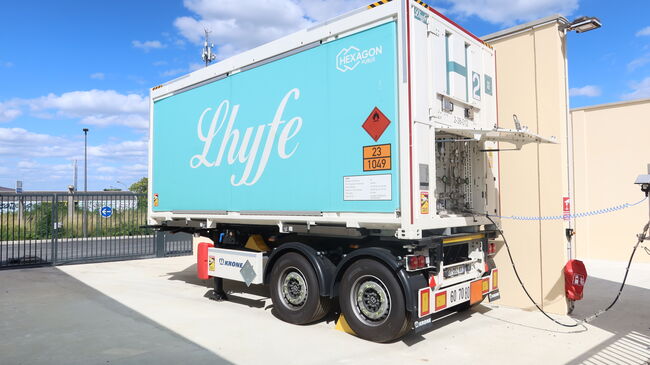
The environmental value of hydrogen mobility depends above all on the origin of the hydrogen. At Lhyfe, hydrogen is produced by water electrolysis using renewable electricity and is certified as RFNBO (Renewable Fuel of Non-Biological Origin).
This European certification guarantees very low carbon intensity and opens access to value-creation mechanisms, notably the TIRUERT scheme (Taxe Incitative Relative à l’Utilisation de l’Énergie Renouvelable dans les Transports) in France. The certificates generated help reduce the cost of hydrogen for mobility operators, particularly at stations operated by Hyliko.
Each batch of hydrogen delivered is tracked and certified, providing essential transparency for fleets committed to credible decarbonisation pathways.
What challenges remain for hydrogen mobility?
Contrary to popular belief, neither vehicle technology, nor the availability of renewable hydrogen, nor distribution infrastructure currently represent major barrier. In France, around fifty hydrogen stations have already been deployed across the country, gradually forming an operational network.
The solutions work, users are satisfied, and the first ecosystems are already in place.
The main challenge is now strategic and political. After a phase of strong support, the hydrogen sector needs a clear and lasting signal about its role in the energy transition and industrial sovereignty. Long-term visibility is essential to secure investment and accelerate large-scale deployment.
Public policy: a decisive lever for securing the sector
At the European level, decarbonisation targets are clearly defined: greenhouse gas emissions must be reduced by 90% by 2040 compared with 1990 levels. These objectives require the gradual integration of renewable fuels and set ambitious trajectories for both industry and manufacturers.
In France, mechanisms such as the TIRUERT scheme help directly reduce the operating costs of hydrogen-powered vehicles. This represents an essential first lever to make these solutions competitive and stimulate demand.
Beyond economic mechanisms, however, the challenge is systemic. Given the scale of emissions reductions required, hydrogen makes it possible to address the most complex uses, where alternatives remain limited. The objective is not to select a single technology, but to mobilise the full range of solutions needed to achieve the transition.
Villabé: concrete proof of a functioning hydrogen ecosystem
Located south of Paris, the Villabé site is now France’s leading centre of excellence for hydrogen-powered heavy goods vehicles. Since summer 2024, fleets of hydrogen lorries have been operating there daily for major retailers and building materials distributors.
The results speak for themselves: vehicle reliability, driver satisfaction and strong commitment from contractors. Villabé demonstrates that hydrogen mobility already works on an industrial scale.
The next challenge is to replicate this model across the country by building strong partnerships between renewable hydrogen producers such as Lhyfe, mobility operators and public stakeholders. Only then will hydrogen be able to play its full role in decarbonising heavy transport.
From vision to action: hydrogen enters the industrial era
Hydrogen opens a new phase in decarbonisation. It is now a practical tool for decarbonising the most complex transport applications, where conventional solutions reach their limits. Feedback from the field shows that the technology is ready, ecosystems are functioning and the value created goes far beyond the environmental challenge alone.
The next step is collective. It depends on the ability to deploy these models at scale, secure investment and integrate renewable hydrogen sustainably into public decarbonisation policies. Given the magnitude of the emissions reductions required, the challenge is not to choose a single solution, but to mobilise all those capable of delivering real impact.
By structuring local supply chains, producing RFNBO-certified hydrogen and working closely with heavy transport players such as Hyliko, companies like Lhyfe are helping to turn climate ambitions into industrial reality. The transition in transport cannot simply be decreed — it is being built, project by project, on the ground.